


When you leave the room, what do your colleagues say about you?
‘When you leave the room, what do your colleagues say about you?’
Sermon preached on Sunday 18 May 2025 Eucharist Service, by The Very Reverend Nicholas Papadopulos, Dean of Salisbury
Acts 11: 1–18
John 13: 31–35
It’s a well-worn interview question. The panel members who ask it are looking for evidence of a candidate’s self-awareness, an essential ingredient of many a person specification matrix. So – top tip – should you ever find yourself being interviewed by me then I suggest you don’t answer ‘They say I work too hard’. Unless that is what they say. In which case you should do something about it. That’s two top tips.
Anyway. We have heard that ‘…when Peter went up to Jerusalem, the circumcised believers criticized him, saying, ‘Why did you go to uncircumcised men and eat with them?’’ It’s not difficult to imagine what Peter’s colleagues are saying about him before he enters the room. There they are, holding steadfastly to the faith in which they have been raised. There they are, being cautious about what they eat and with whom they eat it. There they are, risking everything by proclaiming their faith in the risen Lord Jesus. And then they hear that Peter has been gadding about in the north, accepting hospitality from a Roman centurion and staying with him for several days. ‘Traitor’, they will have said. ‘Apostate’, they will have said. ‘Collaborator’, they will have said.
Peter knows this. When he enters the room, he knows what his colleagues are saying about him. Perhaps one of the consequences of that awful night at the High Priest’s house – the night when Peter denies knowing his friend and in so doing plumbs the depths of self-disgust – perhaps one of the consequences is that his levels of self-awareness are high. The interview panel would be impressed. Mr S. Peter – Self Awareness – tick. Knowing what his colleagues are saying, St Luke tells us that Peter proceeds to explain his actions to his colleagues ‘step by step’. Through the medium of an utterly bizarre vision – it apparently gives him license to eat four-footed beasts, beasts of prey, reptiles and birds of the air, so, labradoodles, lions, lizards, and lapwings – it has been revealed to Peter that it is not for him to call unclean what God has made clean. Labradoodles get the all-clear; so do lions; so do lizards; so do lapwings; and so do Roman centurions. Not that Peter is permitted to eat the latter; but he’s not prohibited from eating with them: as he says, ‘The Spirit told me…not to make a distinction between them and me’.
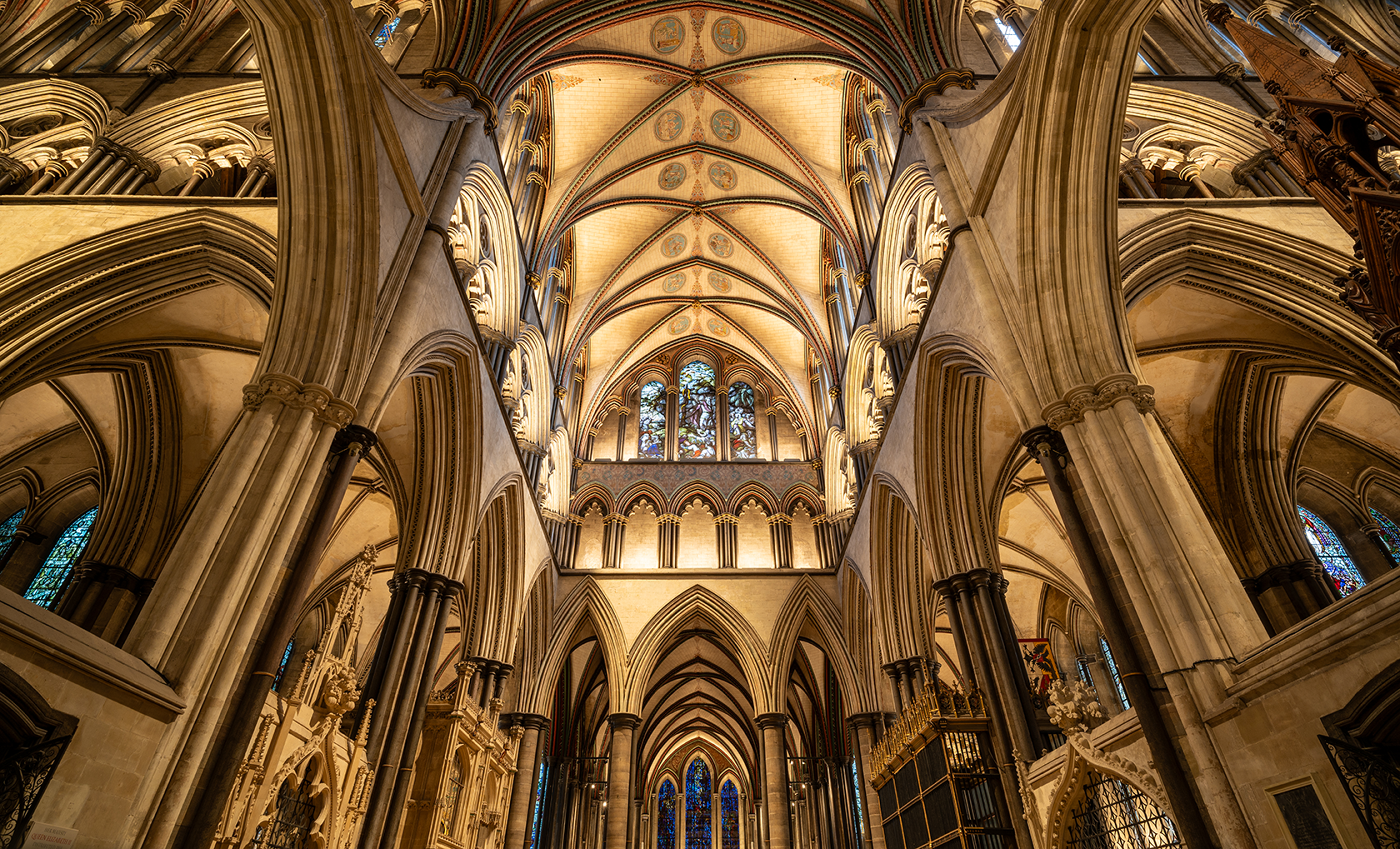
What I love most about the Flower Festival is its profligate recklessness. After describing their work in those terms Michael and the team will probably never speak to me again. So, what do I mean? My flower-arranging skills extend to tired-looking daffodils sitting glumly in a jam jar; but here I encounter a madly extravagant…extravaganza. There are thousands of flowers, of every conceivable variety, in colours of which I have never even dreamt (who knew there were that many shades of blue?), twisted and teased into unheard of shapes, filling the building, overwhelming the senses. That’s what I mean by profligate recklessness – and the recklessness of the Festival captures (for me) something of the recklessness of God that is revealed to Peter. Labradoodles, lions, lizards, lapwings: they’re all in. There are no barriers; there are no walls; there are no dividing lines; there is no them. For God there is only ‘us’. In God (as in Salisbury Cathedral) there is a riot of colour and there is only one room. There’s no slipping outside to talk about our colleagues, or our loved ones, or our fellow volunteers, or our political leaders, or even our clergy.
We’re not told the identity of the colleagues who talk about Peter when he is outside the room. But they must surely include at least some of those who were present at the last supper Jesus shared with his friends. Those were Peter’s less self-aware days, the days when he made a prize twit of himself by first refusing to have his feet washed and then offering to strip off and dive into the basin. Whatever: on that occasion he and the others will have heard the new commandment that Jesus gave to them. ‘…Love one another. Just as I have loved you, you also should love one another’. Perhaps the wine had flowed; perhaps it was late; perhaps they weren’t listening. If they had been, and if they had remembered those words, and if they had taken them to heart, then they would have known what to do when the Holy Spirit fell upon the centurion’s household. Love one another; eat with one another; wash one another’s feet.
And in case this all sounds like the homiletic equivalent of the gorgeous Victoria sponge that they’re serving in the tea tent – full of light and air, crafted to catch the Flower Festival vibe – then remember the immediate context in which Jesus gives the new commandment to his friends. It’s this: Jesus speaks ‘When Judas had gone out’. Jesus speaks when Judas has left the room – when Judas has stepped out into the dark, on a mission to betray. ‘Tell us, Mr Iscariot, when you leave the room, what do your colleagues say about you?’ ‘Nothing. They don’t talk about me.’ replies Judas. ‘They talk about love’. The members of the panel look at him in disbelief. But it’s true. Jesus does not embark upon a character assassination. Instead, he says ‘Love one another’.
As I have already said, there are no barriers; there are no walls; there are no dividing lines; there is no them. For God there is only ‘us’. But love cannot force itself upon the beloved. That’s not love but abuse. We can choose to leave the room. We can follow Judas into the dark. But in the lamplit space we’ve left behind the commandment remains the same: ‘Love one another’. And, I believe, the door always remains open.
There’s a beautiful new Church building in ancient Magdala, the village of Mary of that name. Its principal worship space is an upper room; behind the altar a huge widow has views onto the Sea of Galilee. On either side of the nave are six columns. On each is painted a fresco of an apostle. One of them is Judas. He stands farthest from the altar. He holds the purse from which he used to steal. He is depicted without a halo. Yet he is there, in the same room as his Lord. As if he had never left – or as if he has returned.
There is only one room. And we need never leave it.
Amen.