


We believe in one God
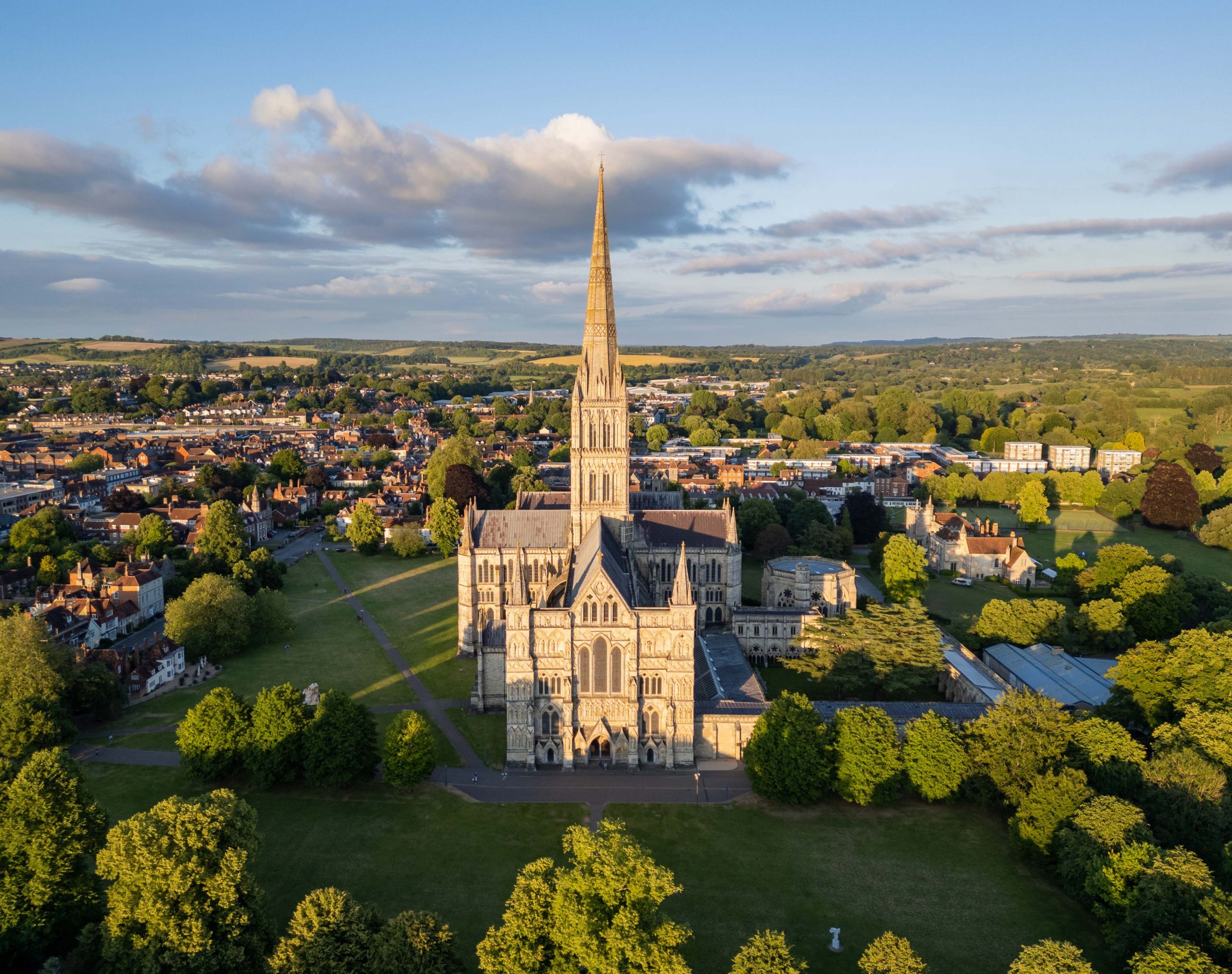
Summer Sermon Series 1/7: We believe in one God
Sermon Preached by Kenneth Padley
Sunday 27 July 2025
1700 years ago, 300 men embarked on an epic journey to change the world. I say 300, but most would have been accompanied by colleagues – learned advisers, family members, domestic helpers, security staff.
These were not pretty men. We are told that they bore in their bodies the scars of torture which they had received more than a decade previously. Once they had been part of a religious minority persecuted for their faith. Some had had eyes gouged out and limbs mutilated. But now they were travelling under official government protection to a conference where they would be lavishly wined and dined – wined and dined by those who had once persecuted them.
The 300 came from Africa, the Middle East and Europe. In an age before cars, trains and planes, they laboured over many weeks to reach a town in western Anatolia which the Turks now call Iznik. Nearby was a palace of Constantine, the Roman Emperor who had summoned them there to answer just one question: what it was they meant when they said ‘we believe’.
2025 marks the 17th centenary of the great Council of Nicaea, the first worldwide gathering of Christians leaders; and so also the 17th centenary of that Council’s creed, a statement of faith which countless churches use as a summary of their belief. Many churches are celebrating the Nicene anniversary. Here in the Cathedral, the clergy will be reflecting on the major clauses of the creed and their contemporary relevance through our summer sermon series entitled ‘We believe’.
This is big stuff so, in addition to the Sunday sermons, we are also promoting two other resources to help you dig deeper.
- As last summer, we are following up the seven sermons with an online discussion group. These groups will run on Mondays between 7 and 8pm. Usually, but not always, the group will be led by the person who has preached the Sunday sermon. If you would like the weblink for the group, you should fill in the registration box on the ‘Services’ page of the cathedral website. You will then be sent a Zoom code towards the end of Monday afternoon.
- Secondly, the Church of England has produced a small booklet to accompany this year’s anniversary. Conveniently titled – you guessed it – ‘We believe’, this booklet works through each section of the creed, offering bite size teaching and simple prayers. It can be ordered through the website of Church House Publishing.
Today we start our series, beginning with the opening clause, ‘We believe in one God’.
My first observation is to note the corporate nature of this statement – we believe. It is a group not an individual that is doing the believing. The bishops of Nicaea were responding together to a challenge from an Alexandrian priest called Arius. Arius denied that Jesus was God. This caused a division in the Church, but Constantine wanted unity in his Empire. And so he called the Council to knock heads together. The presence of Constantine’s soldiers at the Council (as well as all that banqueting) ensured that only two of the 300 bishops refused to sign to the creed at the end of the Council.
Now, when we sing the Nicene creed in the cathedral, we use the old Prayer Book version which begins ‘I believe’. However, the even older original text was a statement of the universal Church, expressed in the first-person plural – we believe. Personally, I do believe the creed but the fact that we believe it together helps bond us into a strong family of faith.
The second word of the creed is ‘believe’. Today’s reading from the eleventh chapter of Hebrews includes perhaps the most eminent definition of belief in the Bible. ‘Faith is the assurance of things hoped for, the conviction of things not seen.’ We place belief in stuff which is invisible but nonetheless in which we have confidence.
Echoing this, John Pearson, Restoration bishop of Chester, in his highly influential Exposition of the Creed, defines belief as ‘assent to that which is credible’[1]. Pearson distinguishes such credibility from the verifiable certainty of ‘knowledge’ but also the wishy-washiness of ‘opinion’. Pearson’s categorisation is noteworthy because, while ‘faith’ in modern parlance might be derided as uncertain and subjective, the classical understanding of faith is that it is rational: we believe what we believe for good reason.
And the first object in which the Nicene bishops placed their faith is divinity: we believe in God. There are many arguments which theists use to defend belief in God.
- Some flow from observation of the world around us, its beauty, its order and very existence.
- Some are more emotional, a sense of personal encounter and deep spiritual connection.
- And some are based on revelation, the claim that God makes herself known through holy books like the Bible.
This is not just stuff for vicars. All Christians should have a grasp on arguments for the existence of God. This is because – in the words of the first letter of Peter – each of us might be called to give an account of the hope that is within us (I Peter 3.15). I do not have time to break this open today – but if you join me on that Zoom tomorrow at 7pm (registration via the Services page of the cathedral website) we will rehearse and pressure-test each of the main arguments for the existence of God.
Next, the bishops of Nicaea qualified their primal creedal statement, by saying that the God in whom they believe is one, not many. Central to the thinking of Arius (which the Council was called to refute) was the idea that Jesus as God’s Son is subordinate to God the Father. Wrong, replied the Nicene bishops: we do not believe in a tiered hierarchy of divine essence or activity: we believe in one God.
Jesus himself affirmed the unity of God, as we heard in this morning’s gospel. In his famous summary of the ten commandments Jesus drew on the ancient Jewish statement of belief, the Shema. Deuteronomy 6.4-5: ‘Hear, O Israel: The Lord our God is one Lord [KJV]. You shall love the Lord your God with all your heart, and with all your soul, and with all your might [NRSV].’
Christians, Jews and Muslims are united in acceptance of divine simplicity – the notion that God is uniform – always and everywhere what God is. In God there can be no variation, no partition, and no change, because any one of these would mean a deviation from God’s fullness – and a deviation from God’s fullness can only mean deviation into something which is less than God. As the bishops of Nicaea knew, there really can only be one God. If time allows tomorrow night, we might also tackle the doctrine of divine simplicity.
That great Council of Nicaea was historically contingent. It was called to respond to a specific problem a long time ago. Records of the Council are sketchy and those which do exist focus more on the pageantry of the opening day, rather than the details of theological discussion. Moreover, we know that it was entirely dominated by men and that it gave no voice to Christians beyond the Roman Empire. Furthermore, the creed which the Council produced was initially fluid. Having left the Emperor’s palace and the presence of his glowering troops, many of the bishops decided they weren’t so sure after all about what they had signed up to. Finally, other problems came down the line, including what the Church thought about the Holy Spirit. As a result, the Creed of Nicaea was refined over the next hundred years and more before arriving at the text which we say and sing today.
Nonetheless, it was the groundwork laid 1700 years ago which made for a seminal moment in the Christian past, present and future. The creed of Nicaea cannot answer every question that Christians face in our daily lives. What it does offer is a guiderail against major error by setting parameters on fundamental doctrine – beginning with belief in one God to whom we ascribe all might, majesty, dominion and power, now and forever, Amen.
[1] Pearson, John, An Exposition of the Creed (London: 1821), 2.