


Services at Old Sarum and Salisbury Cathedral on 14 June Mark 800 Years Since the Relocation of Bishops’ Remains
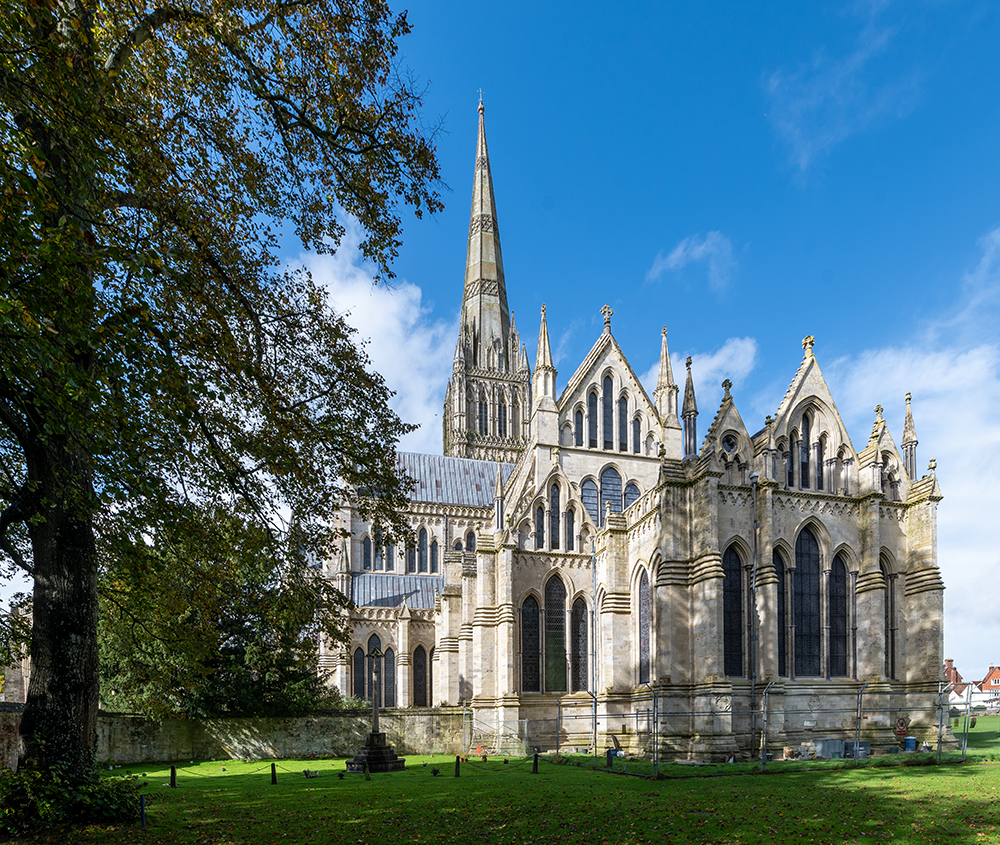
On Sunday 14 June 2026 Salisbury Cathedral will mark the 800th anniversary – to the day – of the re-location of the remains of Bishops Osmund, Roger and Jocelin from Old Sarum to their resting places in the ‘new’ Cathedral.
Two services will be held at Old Sarum and Salisbury Cathedral that afternoon to remember the events. They will be led by the Bishop of Sherborne, the Right Revd Karen Gorham, with the Dean of Salisbury, the Very Revd Nicholas Papadopulos, and sung by the girl choristers and Lay Vicars of the Cathedral Choir.
At 1.30pm a short service will be held outdoors on the site of the cathedral at Old Sarum, two miles from the city centre.
Later that afternoon, at 3.30pm, a special Evensong service will be held in Salisbury Cathedral.
Osmund, Roger and Jocelin were bishops and high-ranking influential political figures. All three were involved in the construction of the cathedral at Old Sarum. They were buried there but their bodies (and likely also their tombs) were later moved, on 14 June 1226, to the new Salisbury Cathedral, not long after the completion of its East End.
In the Register of Saint Osmund, which is kept in the Cathedral’s archive, it is recorded that: “In the year on the feast of the Trinity, when then fall on June 14, the bodies of three bishops
were translated from Salisbury Castle to the new fabric: that is the body of the blessed Osmund, the body of Bishop Roger, the body of Bishop Joscelin.”
Osmund (year of birth unknown; died 1099) came to be viewed as the ‘founder of the cathedral and its chapter’ and occupied the central place in the cathedral’s community of worship and study. In 1091 he issued a foundation charter assigning a generous endowment of land for the cathedral’s use. This enabled the cathedral to grow to a community of up to thirty canons.
Osmund died in 1099 and was buried first in the quire of Old Sarum cathedral and then moved into the new cathedral, possibly in the tomb with foramina (openings) which is today located in the south aisle of the Trinity Chapel at the East End. Many miracles were recorded at Osmund’s tomb at both cathedrals – the foramina enabled people to get as close as possible to Osmund’s coffin. In 1457 Osmund’s canonisation was announced by Pope Calixtus III. Osmund was to be the last English saint to be canonised before Henry VIII’s break with Rome in the 1534. Later in 1457, Osmund’s body was moved into a magnificent new shrine decorated with precious metals and jewels, including a silver gilt image of Osmund with a mitre and crown.
In 1471 a new silver shrine was commissioned. Located at the centre of the Trinity Chapel, the shrine was demolished around 80 years later, in 1539, when the Reformation abolished the cult of saints.
Osmund is sometimes quoted as the originator of The Use of Sarum, a ‘collection of regulations concerning the constitution of English secular cathedrals, and its worship and music.’ The Use of Sarum actually evolved after Osmund’s death, but such was the reverence in which Osmund was held that using his name helped to authenticate this new form of worship.
The Very Revd Nicholas Papadopulos, Dean of Salisbury, said: “The reinterment of the early bishops’ remains in the new Cathedral was a decisive moment for our Salisbury ancestors. The community’s spiritual life had shifted from the hill of Old Sarum to the plain below, where it still stands, eight centuries later. All are welcome as this remarkable anniversary is celebrated and as we commit ourselves afresh to the flourishing of our city and our region.”
Everyone is welcome to join the services on Sunday 14 June – outdoors at Old Sarum at 1.30pm and then Evensong at Salisbury Cathedral at 3.30pm. The services are part of a two-day event at Old Sarum, celebrating medieval life, with demonstrations, crafts and hands-on activities. On Sunday from 12pm-3pm there will also be free family craft activities in the Cloisters at Salisbury Cathedral.
Throughout June there will be an exhibition of manuscripts from the Cathedral’s archives, including a charter issued by King Steven in 1136, which is among the oldest documents in the archive, and an important document from 1171, with the seal of Cardinal Theodinus, which absolved Jocelyn from any involvement in Becket’s murder. These and other items will be on display to visitors in the North Quire Aisle of the Cathedral.