


Take part in the naming process of the four peregrine chicks at Salisbury Cathedral
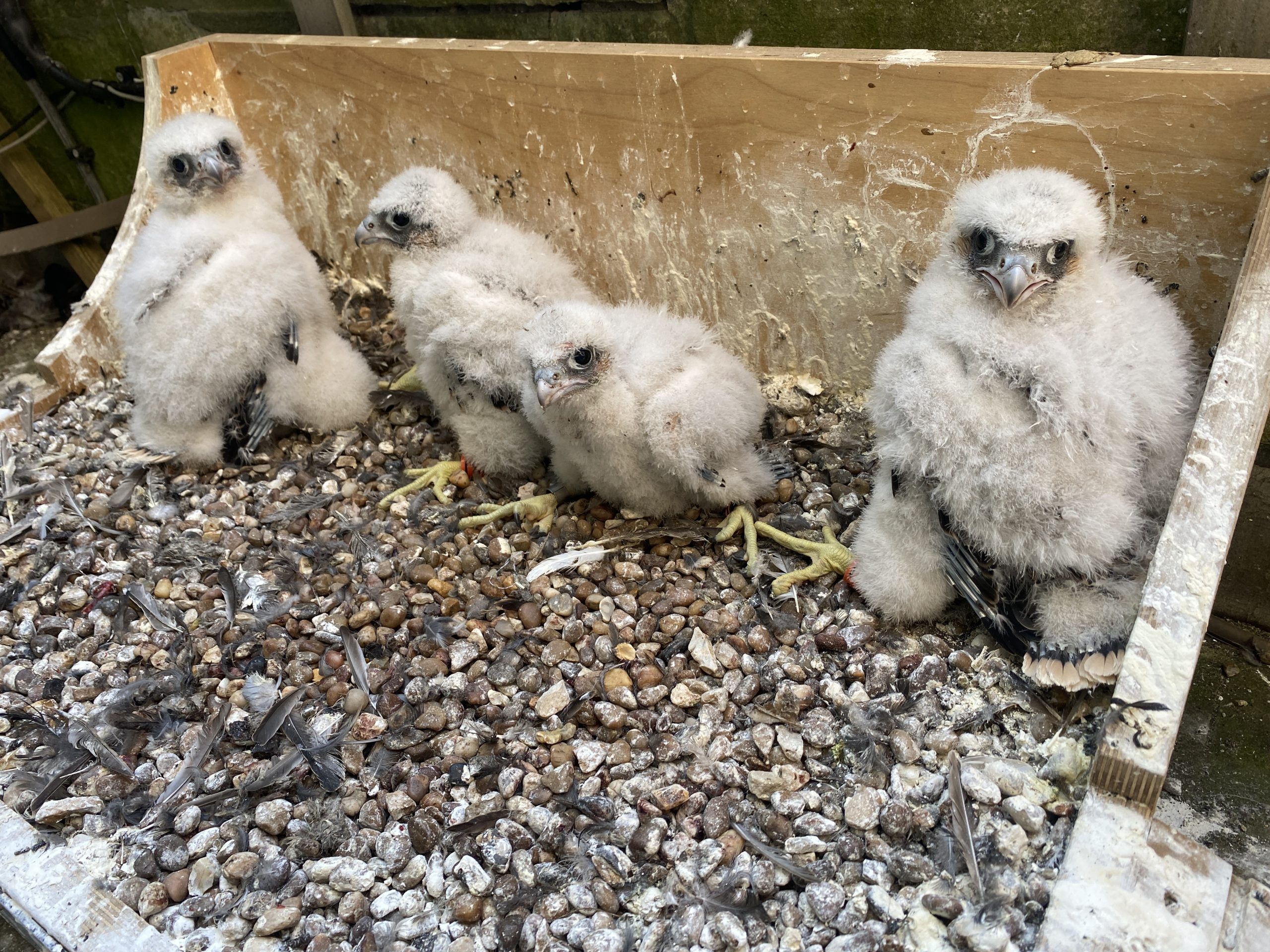
The four peregrines who recently hatched on the Salisbury Cathedral tower have been ringed at about 21 days old and are ready to be named.
On Wednesday morning a team led by Nigel Jones, from the British Trust for Ornithology (BTO) went up the 332 steps to the top of the tower at Salisbury Cathedral to weigh, ring, and measure the birds, as well as get a sample of their DNA. A metal ring is put on their right leg in order to track and keep a record of them, and an orange plastic Darvic ring on their left leg, which bears a unique ID code so eager bird watchers can know who is who.
This year it is estimated there are three males and one female, who is considerably larger than the males. Their sex will be confirmed when the DNA samples come back. All three males range between 520g to 620g, whereas the female weighed in at 890g. Females usually are larger than males for this species.
The information gained by ringing peregrines is vital to contributing to the long-term protection of this species. Researchers can study their movements, monitor their survival rate and population health, as well as their breeding success rate.
This year will see the return of A Date with Nature from Wednesday 4 June, where The Royal Society for the Protection of Birds (RSPB) South Wilts Local Group will set up a gazebo in the Close with telescopes so eager bird watchers can see close-up views of the adult and juvenile peregrines. This will run on certain days until the 30 June.
As Salisbury Cathedral celebrates the theme of water this year, the public is invited to submit ideas for names with a water theme for the young peregrines. More information can be found on Salisbury Cathedral’s Facebook page and website.
The young peregrines will begin fledging in approximately 3 to 4 weeks and will stay around the Cathedral for at least a month, learning survival and hunting skills from their parents before striking out on their own.