


The Translation of Bishops Osmund, Roger, and Jocelin
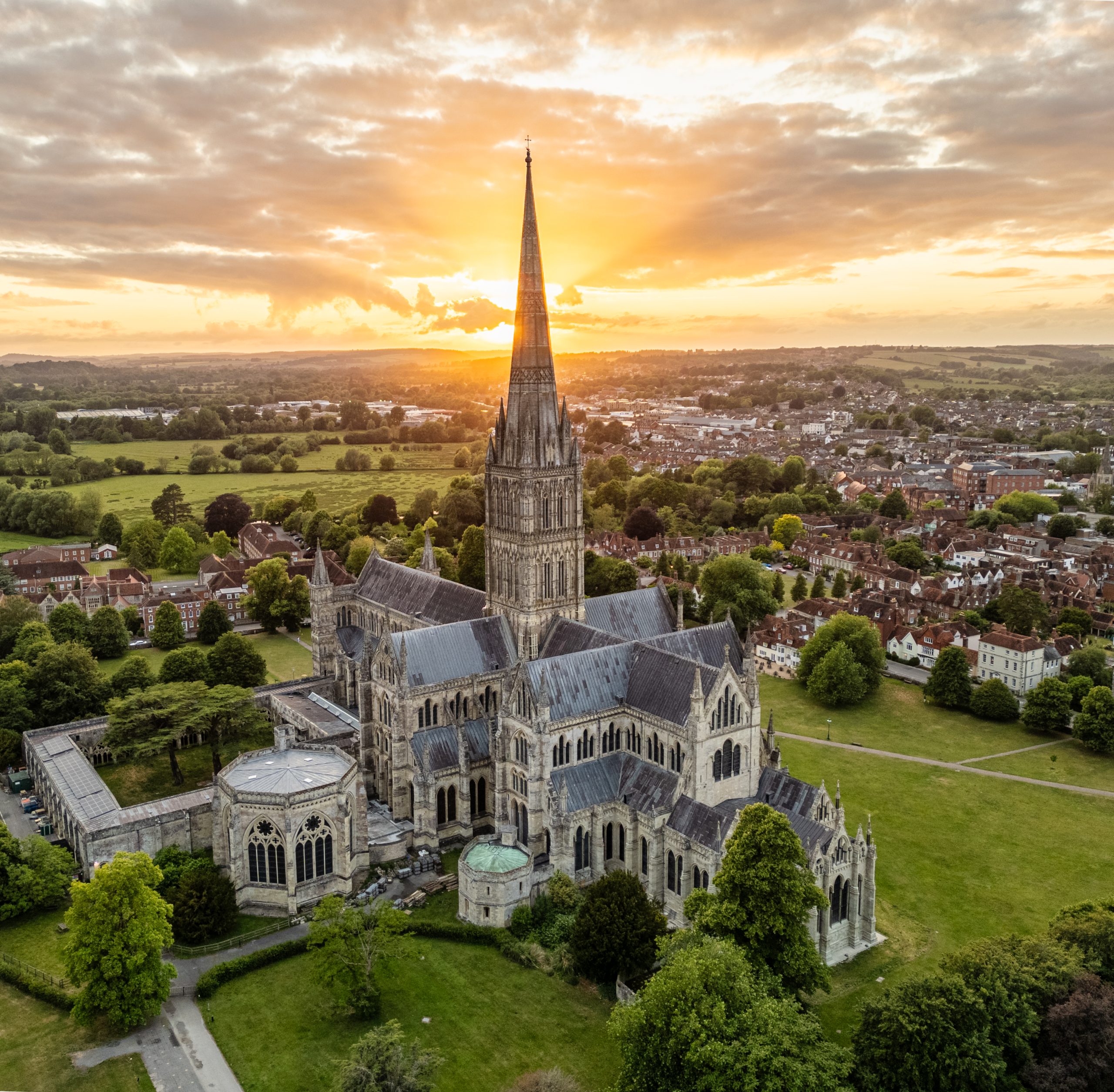
A sermon preached by The Very Revd Nicholas Papadopulos, Dean of Salisbury.
Sunday 14 June 2026
Well, I have blessed a sequinned handbag in a garden in Pimlico (over tea and cucumber sandwiches). I have officiated at a wedding on the shores of Lake Bracciano. I have preached to the future King from the nave pulpit. But I have never commemorated the translation of three sets of bones from one cathedral to another. This feels like a unique occasion – to all of us, I suspect. But it is not without precedent. For we have recalled the instructions given by the patriarch Joseph to his family, instructions with which, generations later, Moses complies. When God’s people set out towards the land that has been promised them, they bring Joseph’s bones with them for reburial.
Whether those instructions were ringing in our forebears’ ears as they dismantled the tombs of Roger, Osmund, and Jocelin and loaded up their wagons for the short journey to the new Cathedral we cannot know. The early bishops of Old Sarum were Norman bureaucrats, immersed in the politics of the new regime as it sought to establish itself in England. Osmund played a part in the collation of the Domesday Book, that ambitious encyclopaedia of King William’s new, taxable assets. Roger developed a taste for building castles, so many and so mighty that he earned the mistrust of William’s successor King Stephen. Jocelin managed to get himself excommunicated not once but twice by the soon-to-be-martyred Archbishop of Canterbury, Thomas Becket. They were men of their era, an era lost in the deep past, men who ministered – or manoeuvred – in ways that are more reminiscent of Game of Thrones than they are of Yes, Minister. But whatever their faults or failings, when the cathedral community over which they had presided in their lifetimes moved down the hill, then, like Joseph, they came too.
That community at Old Sarum had been fashioned in adversity. Situated cheek by jowl with the royal castle its members had been at the mercy of the King’s soldiers. It has been a joy to hear the Salisbury Anthem sung this afternoon, sung at last, six years after its intended premiere was thwarted by Covid. As the author of the text, Henry d’Avranches, writes, ‘Bright chalk dismayed the eye, and wind the ear. The steep ascent was needless pain and strife, but worst of all the lack of water there’. The move to the new site, where five rivers met, was an audacious bid for liberty. Two miles from the hilltop, a safe distance from the King’s reach, the building of New Sarum echoed the pitching by Moses of the Tent of Meeting. It was raised in a place far off from the camp; it was designed as a place dedicated solely to the glory of God, a place in which God’s presence would be made known. As such, it gave the cathedral community room to stretch, air to breathe, and scope to grow. It would have been unthinkable to leave any member of the community behind – and the members included those who were living and those who had died.
Remnants of the first bishops’ tombs remain, of course, and are seen daily by our thousands of visitors. Other monuments have been added across the years – the Victorian bishops Wordsworth and Moberly in the Trinity Chapel, Ted Heath in the spire crossing, William Longspee and the infamous rat at the head of the nave (constituting one of the essential stops on any tour of this place). We present them and approach them as intriguing historical survivors, markers of bygone ages whose stories fascinate and perhaps inspire but whose lives are irredeemably of the past.
Yet that is not what our forebears will have thought as they carefully laid Roger, Osmund, and Jocelin to rest in their new graves. Their community remembered them, honoured them, prayed for them, and believed that they were prayed for by them. They were one in faith and one in hope with their first bishops; they were one communion.
The Tent of Meeting was only ever a temporary, transitory space, intended to last as long as the Israelites’ wilderness sojourn. As our forebears reached this site they would have seen the massive masonry of the new Cathedral rising around them: at last, they must have thought, a place that is ours, a place that will last. And, up to a point, they were right. Here we are, 800 years later, remembering their actions that day. But only up to a point. The eight centuries of New Sarum’s life have far outstripped the forty years of the Israelites’ wandering. But despite its longevity and its solidity this cathedral, hallowed on 14 June 1226 as a gathering place for all God’s people living and departed, is only a foreshadowing of the holy city revealed at the Bible’s very end. The holy city which is the dwelling place of the redeemed, of all the redeemed who have lived and died and been raised by the power of God, who lives in their midst and fills them with his love.
In life and in death we are one with Christ, who alone is the builder of that city, and we are one with our brothers in faith Roger, Osmund, Jocelin, and all who built this place.
May they rest in peace; may they pray for us; and may we be brought as one body to the perfection of eternity.