


Going Back to School
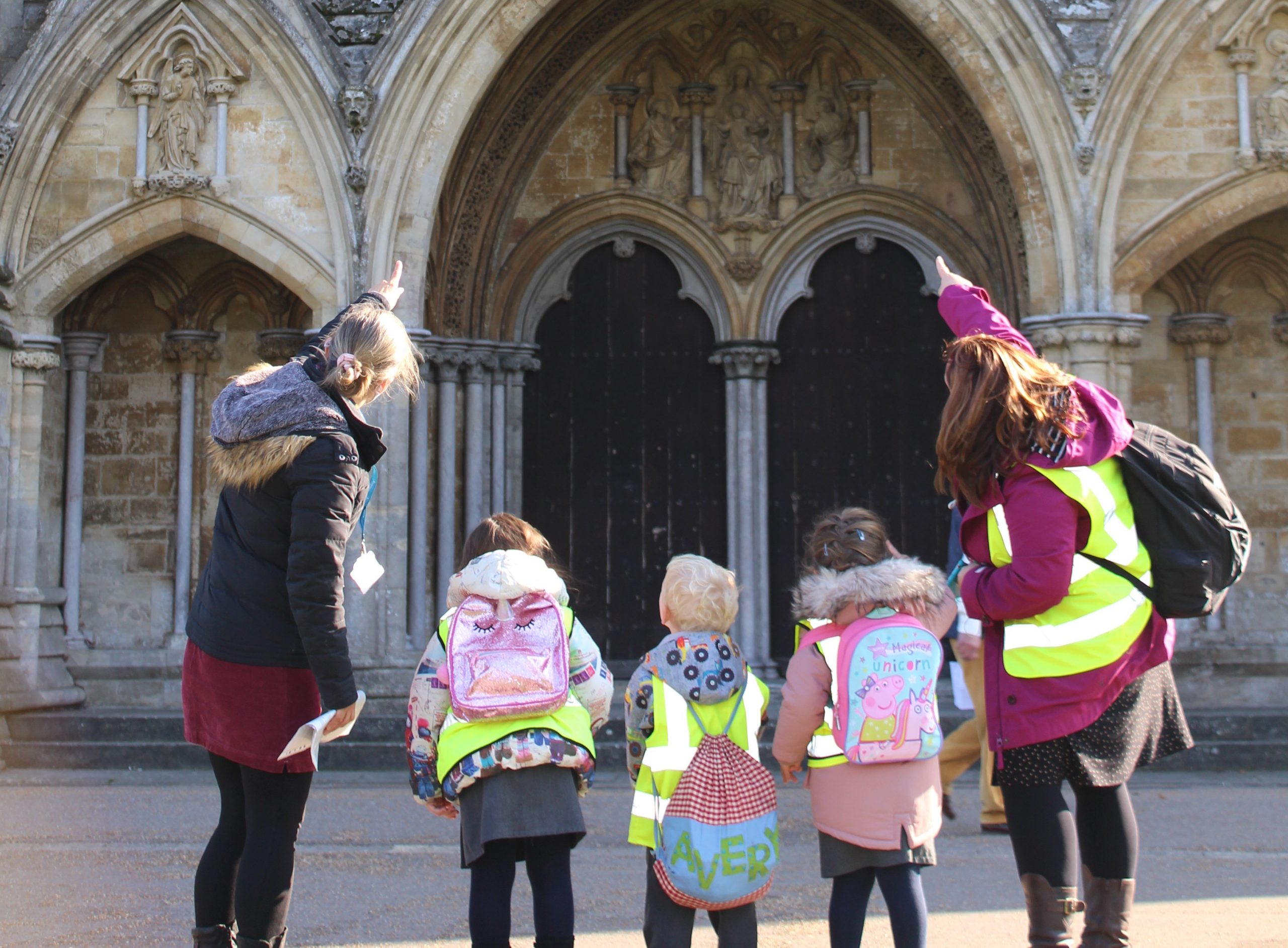
A Sermon preached by the Precentor, Canon Anna Macham
Sunday 30 August 2026- 4:30pm
2 Kings 6: 24-25; 7: 3-end; Psalm 105:1-16 and Acts 18: 1-16
What are your back to school rituals? This week I was at the hairdressers, where an eleven-year-old girl was getting a new haircut to start her new secondary school. This took some time, as the hairdresser got into the spirit of the occasion and went all out to do all the final touches. The girl was there with her mother, and was so excited she found it hard to sit still while the actual cut was taking place, but she was extremely pleased with the end result- and both mother and daughter exuded joy- such that the rest of us in the room couldn’t fail to join in the mood and complement the girl on both the fabulous haircut and achieving this significant milestone.
Being on the cusp of something new like this, one of life’s significant transitions demands a ritual of its own. All of us, I suppose, remember our own versions of this, being taken into town with mum or dad to buy a cartridge pen or new school shoes. Perhaps many of these things are done on- line now- but it’s not just about spending money. These kinds of rituals are about the people you celebrate them with, and a way of showing that someone matters along with the significant new experience they are having. They mark important moments and times, acknowledging that things are changing and, in some ways, will never be the same again. And they show that the person is cared about, along with the mixture of feelings they might have- excitement, nerves, a feeling of being in between things, a yearning for what is passing, or sudden grief for what’s being lost even if you’re well ready to move on, or anxiety about what lies ahead.
Adults of course might experience this time of year rather differently. Going back to work after a long summer break might not feel immediately appealing, though for once we might actually be looking forward to the cooler weather. For adults, our own end-of-summer rituals might be more tinged with nostalgia, or the more significant ones might be associated with clinging on to the last vestiges of summer itself more than the start of autumn. This bank holiday weekend might be the last chance of the season to catch up with friends we don’t have time to see the rest of the year, or for an annual ritual such as attending a particular festival or even singing the weekend as part of a visiting choir in one of this country’s Cathedrals.
Our service this evening celebrates a ritual well loved by many different types of people over many centuries. Choral Evensong has been variously described as “a national treasure”, “one of this country’s best kept secrets” or- a big claim, which someone made on a recent film on the subject- Evensong “symbolises all that is best about this country”. Earlier this year, campaigners pushed for Evensong to be given world heritage status. There are so many reasons why this service is loved, and why people continue to attend, whether people of faith or of none. If we asked every person here this evening what it is that has brought them to this evening’s service, there might be a different answer from every person, and even as many answers as there are people, even if some common themes were to emerge.
The famous writer Ken Follett, author of Pillars of the Earth, set around the fictional Kingsbridge Cathedral, and a whole host of other novels set in medieval times, is a lover of Evensong. Follett doesn’t believe in God but has described himself as a “lapsed atheist.” Having grown up in a repressive sect of the Plymouth Brethren, he has good reason to be wary of religion. But there was something that continued to draw him to Cathedrals and other churches, long after he’d finished writing Pillars of the Earth. He found himself enjoying church services, and his favourite is Choral Evensong.
“Why do I go?” he writes in an article. “The architecture, the music, the words of the King James Bible, and the sense of sharing something with my neighbours all work together. What they create, for me, is a feeling of spiritual peace. Going to church soothes my soul. And, I have at last figured out, that is exactly what it’s supposed to do.”
But what is it about Evensong that touches us so deeply? Whether a faithful observant Christian who has been attending regularly for the whole of life, to someone who’s deeply sceptical about religion, or not a church goer or a young person or someone here singing as part of a visiting choir?
It clearly has something to do with the awe-inspiring, resonant beauty of ancient buildings such as this one. And it has something to do with the power of music and the thrilling sound of the human voice. Evensong has inspired some of this country’s greatest composers, whose music speaks to our emotions and seems to lead us effortlessly into prayer.
It may also have something to do with hearing and reflecting on the ancient wisdom of Scripture, that’s at the heart of the service. We begin with the Psalms, the great prayer book of the Bible, and then move on to another part of the Hebrew Scriptures, telling us of God’s relationship with his “chosen people,” in this case the gruesome history of war between Israel, informed by Elisha’s prophesies, and the powerful Aramean army in 2 Kings. Then on to the New Testament, telling us of Jesus Christ. Evensong leads us through the story of salvation, and it draws us into that story, just as Paul in the early Church in the book of Acts is encouraged not to fear and to speak and not be silent, proclaiming his new-found faith in Jesus.
A further reason why, in an age of decline in Church going, Choral Evensong retains its appeal it’s largely passive- unless you happen to be singing in the choir, or leading it! It doesn’t demand too much of us; in that sense, Evensong speaks perhaps to an era in which many people see themselves as spiritual not religious. There’s very little in it for the congregation to say or do; but if we allow it to, Evensong allows a moment of peace in our busy lives when we can quietly bring ourselves and our lives before God. Perhaps more than any other of the regular services, it’s about handing ourselves over to God, and creating the time and the space for God to speak to us.
As one life coach puts it rituals are “intentional, rhythmic choices” that bring us energy, presence and meaning. A ritual is different from what’s routine. This turning point of the year from Summer to Autumn is when our young people, at least, take stock and look forward, expressing their aspirations for the new school year ahead. But the rituals of this time of year aren’t just for special occasions such as starting a new school. One of the beauties of Evensong is that it happens not just on the Feast Days and the big occasions of the year, but every day in Cathedrals such as this one. What touches us deeply, especially as we look ahead to the days when summer turns to autumn, is that Evensong takes place when afternoon turns to evening. This point of transition from day to night, from light to darkness, affects us spiritually as well as psychologically. It speaks to us of joy and sorrow, of activity and rest, of hope and fear, of understanding and uncertainty, of life and death. For our faith to sustain us, it must speak to us in all moods, situations and times of life. To reflect in prayer at this turning point in the day helps us to bring these subconscious thoughts and feelings before God. And so we turn now to prayer.