


An era of change, or a change of era?
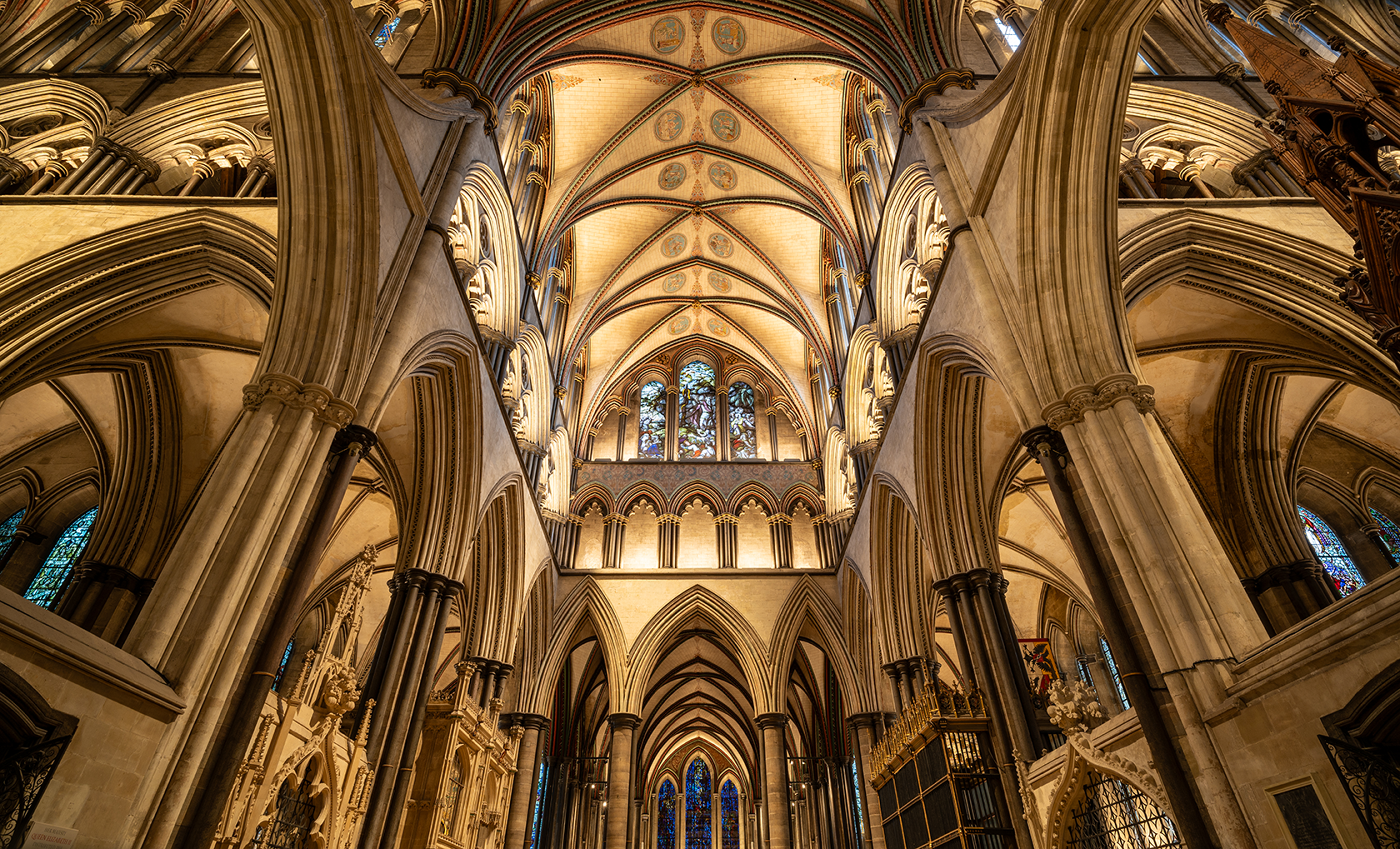
‘An era of change, or a change of era?’
Sunday 14 December 2025
The Very Reverend Nicholas Papadopulos, Dean of Salisbury
Isaiah 35: 1–10
Matthew 11: 2–11
‘Let there be respect for the earth, peace for its people, love in our lives, delight in the good, forgiveness for past wrongs, and from now on a new start’.
Remember that? It was the Millennium Resolution, published in 1999. So: how are we doing?
Our Gospel’s curtain rises on the lonely figure of John the Baptist. He is pacing his prison cell. He has humiliated King Herod. He has been thrown into custody. Perhaps he senses that his time is running out. His mission has been to prepare the way of the Lord. Now, before it is too late, he wants to know whether that mission is complete. Is it Jesus whose way he has prepared; is Jesus the anointed one? He sends his disciples to ask the question.
Pope Francis spoke often of our living not in an era of change but in a change of era: an era in which a stable cultural framework has been shattered by rapid social and technological advance that outstrips our capacity to comprehend or contain. That we are living through such a change of era is unarguable. That it is not the change imagined by the authors of the Millennium Resolution is equally unarguable. I grew up during the Cold War. That the government of the United States would declare publicly (as it has this week) that Europe faces ‘the prospect of civilizational erasure’ would have been unthinkable then, particularly at a moment when the battle lines of the Cold War are being redrawn on our continent’s map.
And one notable hallmark of the change of era is the peril into which the pursuit of truth has been thrown. Anti-vaccination scepticism, climate change denial, and the toxicity of the immigration and asylum debate are some of its more egregious examples, but they are not alone. Among those who compete for our attention the tactic is: make controversial claim, the more outrageous the better; revel in the attention that it draws; and move on to the next thing before there’s any chance to reflect or question. Stephen Yaxley-Lennon (he prefers the folksy-heroic soubriquet ‘Tommy Robinson’) is one such. Mr Yaxley-Lennon wants to ‘put Christ back into Christmas’. I wasn’t aware Christ had ever left it. But here’s some free advice, Stephen: Jesus doesn’t need your help.
I digress: John the Baptist sends his disciples to ask the question. Just look at how Jesus answers. If anyone was ever entitled to say, ‘Do you know who I am?’ it was surely the Second Person of the Holy Trinity. But, asked ‘Are you the one?’ he does no such thing. He does not assert authority, pull rank, or make a truth claim. Instead he urges his questioners to look around them.
The blind receive their sight; the lame walk; the lepers are cleansed, the deaf hear; the dead are raised; the poor have good news brought to them. ‘Go and tell John what you hear and see’. Don’t rely on claims of sovereignty and protestations of power. Look for evidence. Look for evidence of change. Go and tell John that what was prophesied by Isaiah long ago is happening, and that it’s happening now.
You’re not living in an era of change, Jesus says, you’re living in a change of era. Infirmity, poverty, and death have exercised their tyranny over human life since time immemorial, distorting it, foreshortening it, and destroying it. But in the coming of Jesus their malign grip has been loosened; they have been revealed as the paper tigers that they are; their supposed invincibility; their imagined power to name us has been revealed as illusory by the presence of God among them.
We are not told whether John’s disciples ever returned to their master. We are not told whether they passed the message on. We are not told whether when John met his executioner he did so with the assurance that his work was done. St Matthew re-focuses his narrative on Jesus, and on what Jesus says to the crowd about John. ‘…Among those born of women no one has arisen greater than John the Baptist’ he says.
What is the greatness of which Jesus speaks? Plainly it is not the greatness that the Caesars of the ancient world understand or that their pale imitators long for today. John is not clad in soft robes and he does not live in a royal palace; he does not own a private jet or a global media empire, and he doesn’t sit atop a fortune measurable only in telephone numbers. So how is he ‘great’? The clue that St Matthew offers us is in the message he ascribes to John. John has called upon his audience to repent: to change. His greatness lies in the change that he himself embodies. John has abandoned any thought of comfort, any notion of security, and any hope of self-advancement. He has abandoned them in pursuit of truth: he has spoken it to earthly power; he has paid for it with his liberty; he will soon pay for it with his life. Therein lies ‘greatness’ in the new era that has dawned.
Repentance – change – is a proper subject for Advent, the season whose four weeks are traditionally structured around the Four Last Things, Death, Judgement, Heaven, and Hell. Each of these offers us an imperative to examine ourselves and to ask what in us needs to change. An era changes when social and technological advance outstrips human capacity to comprehend or contain: perhaps we cannot control the immensity of AI, the desertification of Uzbekistan, or the imperial ambitions of Putin and Trump. But here’s the thing: the change of era announced by Jesus to John’s disciples has never ended. We live in it. The blind receive their sight; the lame walk; the lepers are cleansed, the deaf hear; the dead are raised; the poor have good news brought to them. Infirmity, poverty, and death are not, not, our ultimate reality. Neither are the vanity of presidents, the prejudice of racists, the hate, exclusion, and division pedalled by the scaremongers as necessary and desirable.
Our ultimate reality is the one who has come and who will come again; born in a stable at the behest of empire; put to death on a cross at the behest of empire. Only he has the authority to name who we truly are. We repent when our lives proclaim this. Respect for the earth, peace for its people, love in our lives, delight in the good, forgiveness for past wrongs, and a new start? Amen. But warm words will not realize the aspirations of a quarter-century ago. Only our repentance will. So: alleluia! Come, Lord Jesus.