


I believe in miracles you sexy thing
Sunday 1 February 2026
A sermon by Kenneth Padley
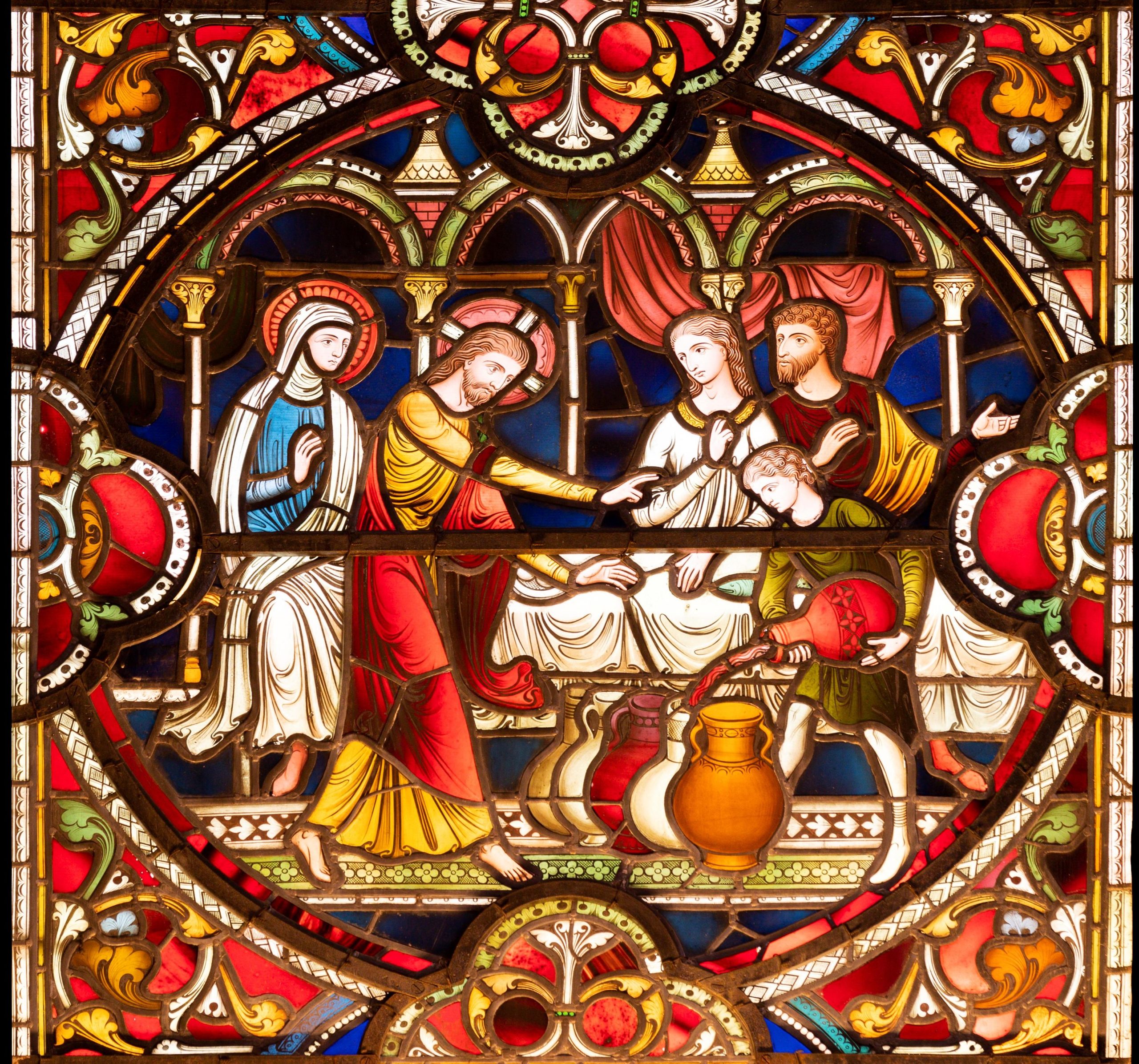
Reading John 2.1-11
I believe in miracles. You sexy thing.
Or so proclaims the song by the band Hot Chocolate.
We often assert that events and objects are miraculous, don’t we? A day without rain. A road without potholes. An injury healed. A victory for the England cricket team. However – wonderful though such things are – they are all explicable within the normal workings of the created order, the worldly effects of worldly causes.
By contrast, true miracles only occur when something happens contrary to the physical principles that guide the universe. True miracles are wholly unexpected and totally astounding. As such, true miracles can only be caused by God – that is, by the One who sets in motion those normal processes of the world. When a true miracle occurs, God opts to short circuit the way things usually happen.
There is an irony here because, despite our tendency to identify and praise minor miracles – the day without rain, the road without potholes – we are much more reticent to accept true miracles when they occur. True miracles upset the comfortable ways in which we understand the world. In the age of Jesus – just as today – people preferred natural explanations. That is why, even in the narratives of Scripture, not everyone responds with faith to God’s amazing deeds.
However, it is only because God works through miracles that we can know anything of him with certainty. If he did not work occasionally in utterly unpredictable ways, all we would see would be the mechanical operations of the universe – and all those occasions when people claim to experience the presence of God might be no more than human self-delusion. With miracles, however, we are confronted by something beyond everyday expectations and experience. When God performs miracles, she really wants us to sit up and listen.
For this reason, stories of miracles play a vital role in the Bible and in the life of Jesus in particular. Miracles were formative for the first followers of Christ in their understanding of discipleship – do not be afraid, from now on you will be catching people – and they influence our own faith also. That is why, as we traverse this season of Epiphany and celebrate the ways in which Jesus was gradually revealed to the world, we hear again the story of the wedding at Cana, which St John emphasises as the first of Jesus’ jaw-dropping acts of power.
I said that there is an irony in our reticence to accept true miracles when they occur. I suggest also that there are opposite risks, and that our approach to miracles becomes too simplistic or too optimistic.
There is a danger of being too simplistic about miracles as we read our Bibles. We cannot prove, two thousand years later, exactly what happened, when and why. It is too crude to say that ‘this one was fact’ but ‘that one was imagination’. However much we probe and pry, we cannot get back behind the texts of the gospels to an objective, verifiable account of the man of Nazareth who walked and talked forty, fifty, sixty years before those gospels were written. And, as William Wordsworth put it,
Our meddling intellect
Mis-shapes the beauteous forms of things:-
We murder to dissect.
We should not murder the gospels, robbing them of their spiritual power, as we dissect them with exegesis. We cannot completely get behind their texts – but we do still have those texts, records of men and women whose experience of the life, death and resurrection of Jesus convinced them that they had encountered the miraculous, with the result that they were prepared to reorient their lives radically to God’s service and worship, often in the face of great personal risk and adversity. When we read these stories we can at least enquire after the significance attached to them by the gospel writers, as we seek the meaning in the miracles.
If there is a danger of being too simplistic about miracles when we read our Bibles, there is also a danger of being too optimistic about miracles as we read our world. Confronted by the challenges of daily life as well as the tectonics of big global events, we can fall into the trap of expecting the miraculous, believing that all problems will be overcome, and that circumstances will inevitably get better. At a personal level this can lead to an abdication of responsibility and the presumption that someone else will sort things out. Yet, deep down, we know that there is no cleaning fairy. At a macro level, the cumulative effect of overoptimism is the doctrine of constant progress, that meta-narrative which has underwritten western society since the Enlightenment.
The song of constant progress is not that ‘things can only get better’, but that ‘things will only get better’. Over the last three centuries we have seen extraordinary advances in medical care, housing conditions, and opportunities for human fulfillment. But Christians should not read from this a linear understanding of progress, as if God’s kingdom will be realised on earth through our own striving. Because over the last three centuries we have also seen the unprecedented man-made horrors of mechanised warfare, outrageous religious and ethnic persecution, and environmental degradation. Even in our own relatively comfortable context, we are aware of challenges as the long-term slowing of economic growth erodes the Baby Boomers’ confidence that our children will necessarily enjoy a better lifestyle than we do. It is this dawning awareness which inspires populist attempts to jump-start the economy and myopic reticence towards cross-party responsibility in major policy areas such as social care and the drive to carbon net zero.
Theologians have long appreciated our flaws and limitations. We read this from the awareness of Paul that all are sinners and fall short of the glory of God; from Augustine’s sense of humanity as a mass of sin; from the Reformed concept of total depravity. We have no grounds for singing that things will necessarily, inexorably get better.
In this context, miracles are not markers along a road of irreversible progress. Rather they are pointers to the existence and presence of God, and reminders that – however bad things might get – God’s has got this situation, that (somehow) he is holding us all.
And that is precisely where John lands the wedding at Cana. The point of the story, John concludes, chapter 2 verse 11, is that it is a sign. ‘Jesus did this, the first of his signs, and revealed his glory; and his disciples believed in him.’ The miracle is a sign about the identity of Jesus, that he is the embodiment of the only one who can perform miracles. And the miracle is a sign of his purpose, his summons to our reconciliation, restoration and flourishing in God.
Jesus’ miracles directly changed the lives of only a few: those whom he healed, those whom he fed, those whom he rescued from the storm. His miracles did not cure the world of all its woes. But they do point to that which is beyond those woes. In replenishing and overflowing the six jars and their wine (which had been made by human hands on the six days of the working week), Jesus offers an exuberant vintage which overtops our earthly vessels with a tantalising foretaste of sabbath rest and resurrection glory.